




How Many Pages Are Ideal for Spiral Binding
Spiral binding is one of the most popular binding options for students because it allows books to open flat and remain easy to use. However, spiral binding has practical page limits. This guide explains how many pages are ideal for spiral binding and how to plan large notes correctly.
Why Spiral Binding Has Page LimitsSpiral binding uses a continuous plastic or metal coil to hold pages together. As the number of pages increases, the coil size must increase as well. Very thick spiral-bound books become heavy, difficult to turn and less durable over time. |
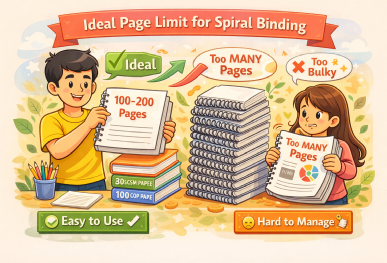
Ideal Page Range for Student NotesFor most student notes, spiral binding works best when the page count is kept within a manageable range. This allows the book to open smoothly and remain easy to handle. Medium-sized spiral-bound books are more comfortable for daily study and exam preparation. |
Problems with Very Thick Spiral BindingExtremely thick spiral-bound books can cause pages to tear near the binding holes due to frequent use. They are also harder to store, carry and flip during long study sessions, which can reduce usability. |
Better Approach for Large NotesInstead of binding all pages into one thick spiral book, students can divide large notes into multiple smaller volumes. This improves durability, makes books easier to carry and often reduces overall binding-related issues. |
When to Consider Other Binding OptionsIf the total page count becomes too high, other binding options such as perfect binding may offer better durability and professional appearance. Choosing the right binding type based on page count helps ensure long-term usability. |
SummarySpiral binding is ideal for small to medium-sized student notes. For very large documents, splitting content into multiple spiral books or choosing a different binding method improves durability and ease of use. |




Feel free to contact us -
+91 -
If we cannot reply please leave a whatsaap message
Working hours
(Mon-
E-

Free PDF Tools for Better Printing
Prepare your files correctly before printing and avoid unnecessary cost